United States + Heavy-Duty Vibrating Screen + Dewatering
Product: Heavy-Duty Vibrating Screen
Country: United States
Application: Dewatering
Heavy-duty vibrating screens are widely used for dewatering in mining, metallurgy, chemical, and environmental protection industries, but their dewatering effect differs fundamentally from that of hydraulic screens, centrifuges, and filter presses. The following is a detailed analysis:
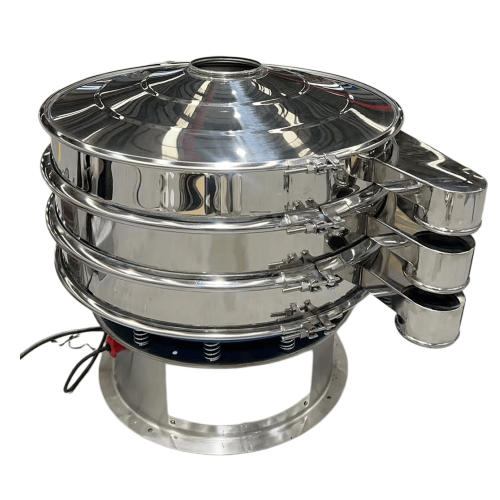
I. Dewatering Principle of Heavy-Duty Vibrating Screens
Vibrating screen dewatering mainly relies on:
- Vibration: High-frequency or low-frequency vibration causes the material to jump and tumble on the screen surface, promoting the separation of water and solids.
- Gravity drainage: Water flows out through the screen holes or gaps under gravity.
- Screen surface shearing: As the material moves forward on the screen surface, water is "thrown" out.
Key point: Vibrating screen dewatering is a combination of physical screening and gravity drainage, rather than forced dewatering by pressure or centrifugal force. Therefore, it is more suitable for coarse-grained materials that are easy to dewater.
II. Material Characteristics Suitable for Vibrating Screen Dewatering
- Coarse particles (>0.5mm): Sand, gravel, slag, crushed coal, plastic flakes. Moisture content can be reduced to 10%~15%.
- Regular particles, not easily clogged: Quartz sand, ceramic particles, metal shavings.
- Higher concentration (>30%): Coal slime in coal washing plants, concentrate in mineral processing plants; requires high-frequency vibration.
Summary: Vibrating screens are best suited for coarse, non-sticky, high-concentration materials. For fine particles (<0.1mm) or sticky materials, the dewatering effect is far inferior to centrifuges or filter presses.
III. Operating Precautions
- Screen Selection: Wedge-shaped wire screens are recommended for dewatering (anti-clogging, fast drainage), with an aperture of 0.3~2mm.
- Vibration Parameters: High frequency (>20Hz) + small amplitude (2~4mm) is suitable for fine particle dewatering; low frequency (10~15Hz) + large amplitude (5~8mm) is suitable for coarse particles.
- Spray System: Spray pipes can be installed above the screen surface to help wash away fine particles and prevent clogging.
- Inclination Angle: The screen surface in the dewatering section is typically set with a negative inclination angle of 3°~5° (inclined upwards) to extend the material residence time.
If you have specific materials (such as sand, gravel, coal slime, fruit pomace) and dewatering targets (target moisture content), please provide detailed information. JX Filtration will recommend the most economical equipment combination for you!
After-Sale Services
- Quality guarantee: 12 months after the equipment having been operated.
- Satisfied after-sell service: free maintenance and inspection.
- Detailed installation instructions, CAD drawing and product qualification certificate.
Any Requirements, Contact Us Now!
Nina
Email/Teams: nina@filtrationchina.com
Mobile/WhatsApp/WeChat: +86 17269571060