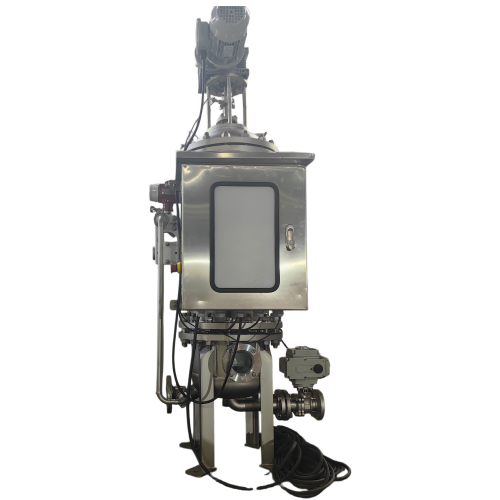
What is automatic backwash filter?
Automatic backwash filters are primarily suitable for water-based liquids, including clean water, wastewater, circulating cooling water, groundwater, river water, and reclaimed water. The core advantage of this type of equipment lies in its ability to automatically clean the filter screen, making it particularly suitable for liquids with moderate impurity content, low particle hardness, and no large amounts of viscous substances.
From the perspective of impurity characteristics, backwash filters are best suited for handling particulate, non-viscous, and non-fibrous solid impurities. Typical suitable impurities include silt, rust, algae, biological slime, metal shavings, and dust. These impurity particles are usually loose and do not adhere to the filter screen surface, so they are easily washed away by the water flow during backwashing.
Practical Applications:
- Circulating Cooling Water: Backwash filters are ideal for circulating cooling water systems to remove silt, algae, and biological slime from the water, protecting heat exchangers and pipes from clogging.
- Industrial laundry wastewater: It is also widely used for the reuse of industrial laundry wastewater, such as wastewater from industrial laundries, which contains fibers, silt, and small amounts of grease. After passing through a pre-hair collector, the backwash filter can effectively remove these impurities, ensuring proper subsequent deep treatment.
- Groundwater, river water, and municipal wastewater: The suspended solids concentration in these water sources is usually low, and the particle hardness is moderate. Backwash filters can operate stably and automatically backwash, greatly reducing manual maintenance costs.
However, some materials are not suitable for backwash filters.
- High-viscosity liquids: Such as syrups, glues, crude oil, and thick slurries, particles will adhere to the filter screen, and the backwash water flow cannot remove them, causing the filter screen to clog quickly.
- Liquids with high concentrations of suspended solids: If the concentration exceeds 500 mg/L, backwashing will be too frequent, or even impossible to filter normally. In this case, pretreatment using a sedimentation tank or sand filter should be performed first.
- Liquids containing high levels of oil: Oil exceeding 100 mg/L will clog filter screen gaps, rendering backwashing ineffective; air flotation is required for oil removal first.
- Liquids containing high levels of long fibers: Such as textile and papermaking wastewater, fibers will entangle the filter screen, causing permanent damage. These materials should be treated using a fiber recovery machine or sedimentation tank.
- Strong acid and alkali liquids: Liquids with a pH below 2 or above 12 will corrode stainless steel; plastic filters or special alloy materials are required.
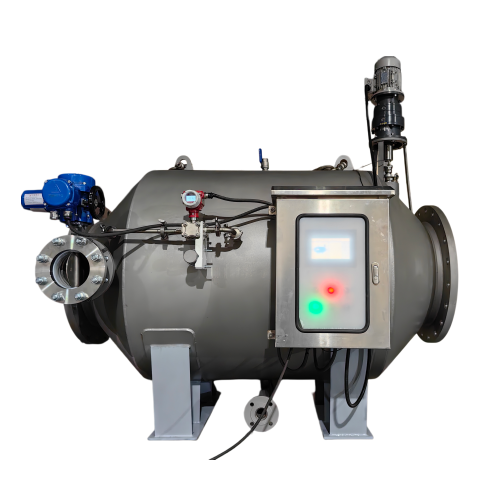
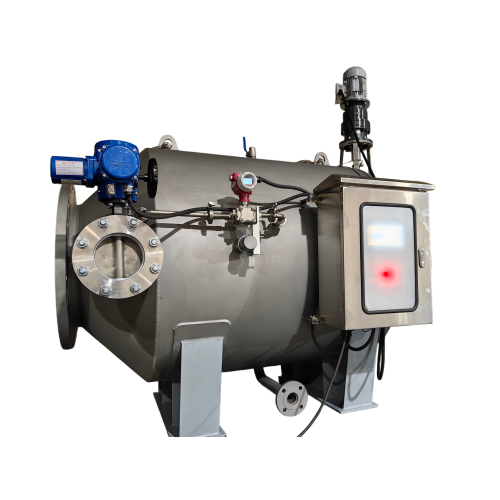
Backwash filters are best suited for treating water-based, low-viscosity, oil-free or slightly oily, long-fiber-free liquids with moderate suspended solids concentrations. If you can provide specific material information, including liquid type, impurity composition, concentration, temperature, and pH value, JX Filtration can recommend the most suitable equipment model and configuration.
Any requirements, contact us now!
Nina
Email: nina@filtrationchina.com
Mobile/Whatsapp/WeChat:+86 172 6957 1060